What is Massage Therapy?
Massage therapy is therapeutic touch from an active participant to a passive participant. There is a lot of variety within the profession. It can involve long, flowing strokes using a lubricant (oil, lotion, water, powder) over a nude body or static pressure points pressed on a fully-clothed body, with lots of techniques between those two extremes.
It can involve squeezing, vibration, rocking, stretching, tapping, cupping, static pressure, and/or moving pressure.
The therapist may use his or her hands, arms, elbows, feet, knees, and/or tools, such as those made of bone, metal, plastic, or power-operated devices.
Massage therapists may perform their work by placing the client on a massage table, a massage chair, a mat on the floor, in water, in mud or clay, or suspending the client in aerial silks or a hammock.
The techniques chosen by the therapist depend on their area of specialization and the client’s needs. Some therapists view their work more as an art form, working rhythmically with music and mindfulness meditations, introducing aromas and other sensory delights. Other therapists view their work more as a medical treatment and prefer working alongside doctors in busy clinics. Still others see themselves as spiritual healers, akin to priests and rabbis. Massage therapy is a broad field that encompasses body, mind, and spirit.
In the U.S., massage therapists are initially trained for 500-1500 hours with a strong focus on anatomy and physiology, hygiene, and ethics, with the massage techniques of Swedish and Deep tissue. Every year or two (depending on the state), we are required to complete additional training to maintain our licenses.
A Typical American Massage In The 21st Century:
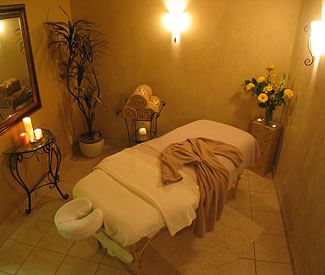
The client arrives at the therapist’s location, which tends to have soft lighting with calming decor and music.
The client briefly discusses health concerns and physical or mental reasons for wanting a massage, then the therapist leaves the room so the client can disrobe.
The client lays down on a padded table with a special face cradle to support the face when lying face-down. They cover themselves with the sheet on the table. About 50% of Americans remove all clothing. The other 50% remove everything except for the bottom underwear.
*Remember, this is highlighting a typical massage experience in America. Even in America, there are also many mobile therapists, many modalities that require different table and clothing setups, and non-calming massage environments such as hospitals and festivals.
Massage is for...
the mind
Many massage therapists have seen how their work benefits people’s lives due to stress reduction and mindfulness. Some studies can be found regarding the mental benefits of massage therapy regarding anxiety, depression, and insomnia. If you’re looking for relaxation, you’ll want to find a therapist who enjoys providing relaxation massages rather than quick, clinical treatments in uninspired environments.
Some modalities that are especially soothing for mental health:
Esalen, Watsu, Swedish
Other elements these therapists might bring into their practice:
Guided meditations, sound healing
the body
More and more studies are being conducted in the 21st century proving the efficacy of massage therapy for various physical ailments. If you’re an athlete, have chronic pain, or you’re seeking to heal a muscular injury, you’ll end up feeling frustrated if you book with a therapist who hasn’t had any advanced training in that arena because they are focused on the spiritual or mental health aspects.
Some modalities that are especially useful for physical issues:
Deep tissue, Medical massage, Sports massage, Craniosacral, Lymphatic drainage
Other elements these therapists might bring into their practice:
Icy Hot, take-home stretching and exercise guides, E-stim, kinesiotape, ice packs
the spirit
Religious leaders often use touch to ease suffering or grief. Christian history is full of “anointing”, which means “to rub oil into”, aka “massage”. Many saints are described as rubbing holy oil on the sick and helping them to walk again. In other words, they massaged them and eased the physical pain, but the credit was given to the oil (“holy oil”) rather than the rubbing. Nowadays, the Christian leaders focus entirely on the oil and not the rubbing, yet the spiritual elements remain.
When your body is rubbed with oil by another caring person, something lifts the spirit. Some therapists align themselves with a religion or spirituality for this reason.
Some modalities that are especially focused on the spirit:
Reiki, Lomi-Lomi
Other elements spiritual massage therapists might bring into their practice:
Energy healing, chakra balancing, crystals, Shamanic journeying
What is NOT Massage Therapy?
Massage therapy is regulated by state boards in the U.S., and massage therapists are tested by undercover officials posing as clients to ensure they are not violating the law. Please do not stress out your therapist by asking them to go beyond their scope of practice and risk losing their license.
Massage therapists are not doctors, who can make diagnoses and write prescriptions. Whatever your therapist says should never be construed as a diagnosis or a prescription. He/she may make recommendations, but always take them with a grain of salt and do your own research. If you ever feel that your therapist is doing something unsafe, trust your gut and speak up about it.
Massage therapists are not counselors, who are trained to give mental health advice. Anything your therapist says regarding your mental health is to be taken with a grain of salt. Massage therapy itself may help your mental state, but the therapist works with your body to achieve those effects. Your therapist isn’t licensed to give you advice.
Massage therapists are not sex workers, who sell sexual experiences. Do not ask your massage therapist to dress provocatively or touch your genitals, etc. Asking for a “happy ending” is offensive to a therapist who has advanced training and a license to operate massage therapy, and worries the therapist that he or she is being tested and license revoked if a harsh response is not given. You can expect to be banned if you make any assumptions that massage is a sexual experience.
History
Massage therapy has a long, fascinating history. We know it’s been used for healing since prehistoric times because humans instinctually touch and rub areas that are painful. Written documentation about massage began with Ayurvedic texts in India around 1500-500 BCE stating the therapeutic use of touch for healing. Ancient Chinese medical texts such as the Cong-fou and the Yellow Emperor’s Classic Medicine also describe massage therapy as cures for various ailments. Hippocrates, Galen, and healers all around the ancient world were writing about massage as part of their medical treatments.
In the 1500s, Ambrose Paré was a famous French surgeon who doctored kings. He invented a steam bath (along with many other inventions) and describes massage techniques frequently throughout his book on medicine. He even claims to have cured a family of 4 from syphilis by applying massages 3 times a day and a specialized steam room.
The word “massage” was first used in France in the 1800s. It is believed that the Arabic word “massa”, which means “to touch, palpate, feel”, came to France via Napolean’s wars and then became the word we know today. English got it from French around the 1850s. Before that, books written on the subject use the word “anoint”, “rub”, “friction”, or describe the actions in other terms. “Mashiah” is a Hebrew word, a Semitic language like Arabic, and translated to “rub with oil” which is what “anoint” means. “Messiah” comes from the word “Mashiach”, which means “the one rubbed with oil”, aka “the anointed one”, aka “the massaged one”.
Every country has different laws regarding who can provide massage therapy, and in the USA, every state has different requirements. Generally, every state requires at least 600 hours of training from an accredited school, passing a national exam, and filling out a lot of paperwork. Furthermore, every county within every state has different laws, and whether a therapist can take clients in their home depends on where the house is located.
¹ https://www.naturalhealers.com/massage-therapy/history/
² Calvert, Robert Noah. 2002. The History of Massage: An Illustrated Survey from around the World. Inner Traditions/Bear & Company.